Zealous For Good Works: What Are Good Works (part 3)?
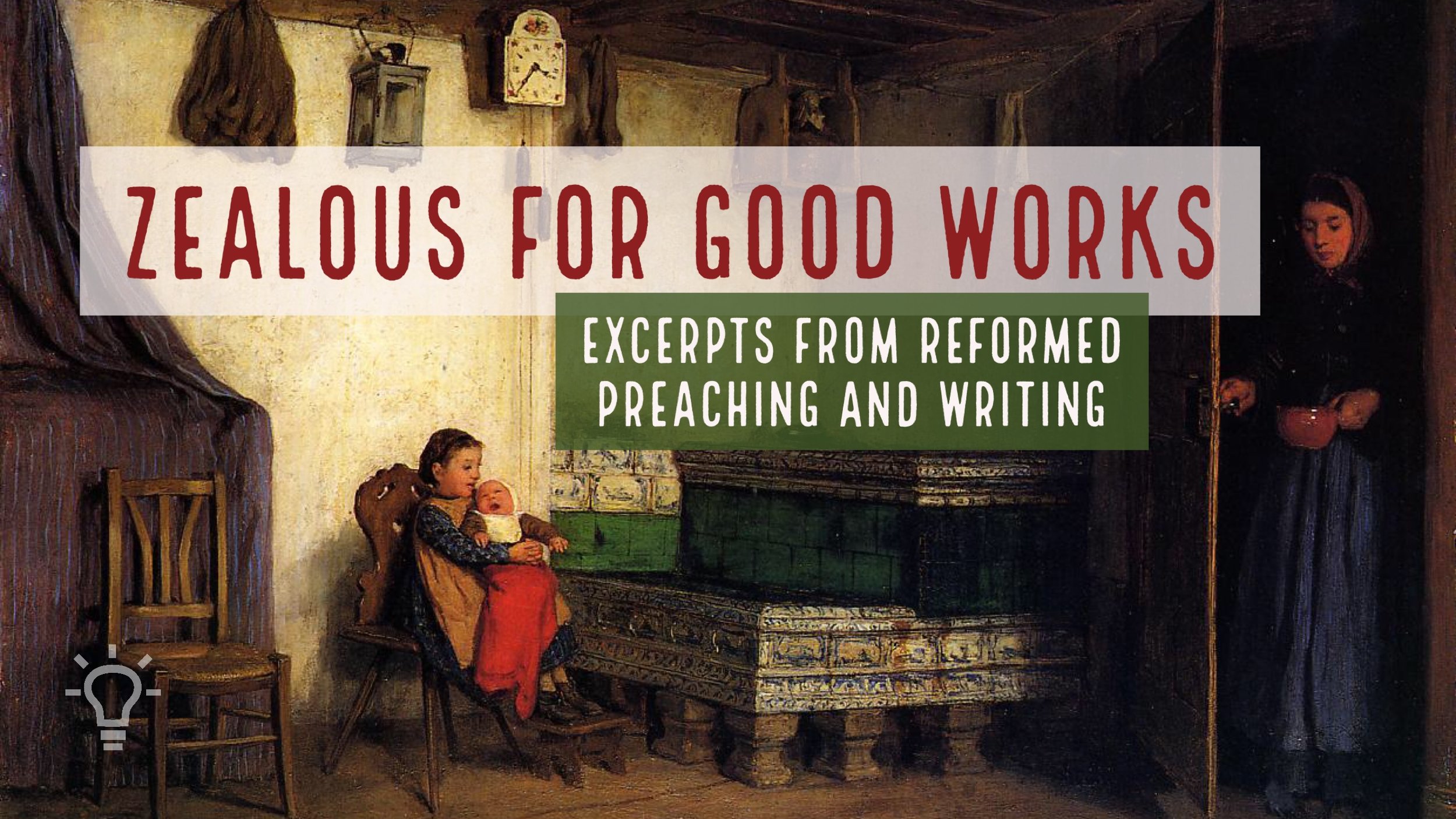
You have been recreated by the grace of the Spirit in Jesus Christ to live for God in the doing of good deeds—living in a way that pleases him. All objections and excuses must fade away in light of this truth, and we must be convinced that as Christ came to do the Father’s will, so he leads us forward in life as his new creation to do the same. Good works manifest the love of God to him and our neighbors. Good works are the imitation of Christ by the Spirit.

Free Resource Focus: “Free Daily Bible Study”
Resource: “Free Daily Bible Study”
Where:https://freedailybiblestudy.com/
What: An easy to used daily Bible Study and podcast that goes through the Bible one chapter at a time, following the M’Cheyen reading plan. It is simple in expression but theologically sound. You can subscribe via email or follow along on the blog, reading one chapter of the Bible at a time, or the whole M’Cheyen plan.
Zealous For Good Works: What Are Good Works (part 2)?
In light of some recent online controversy surrounding the place of good works in the lives of Christians, I am engaged in this series of posts with the aim of encouraging zealousness (rather than mere theological debate) for good works. In the previous post, I began to discuss what we mean by “good works” by attempting to clear out some misconceptions. This post turns in a more positive direction, seeking to answer the question more directly—soon enough we will be on to examining excerpts from historic Reformed preaching and writing.
But first, what are good works?

When The Truth Sounds Like Heresy: Piper and A. W. Pink On The Need For Repentance
I was struck then by A. W. Pink’s old explanation of the necessity of repentance. In the passage below he shows his concern over similar problems that Piper and representatives of the historic Reformed tradition are addressing: the necessity of sanctification, repentance, and good works is a pressing need for our lawless day, but some in our own circles not only sound an uncertain sound, they actually often actively fight against these biblical and necessary emphases.

Mark Jones on Justification and Sanctification: An Archive (Updated October 2019)
This is an index and introduction to Mark Jones’ posts on justification, sanctification, good works, merit, and future judgment. These posts address aspects of these doctrines in light of current controversies, past wisdom, and our Reformed confessional standards.
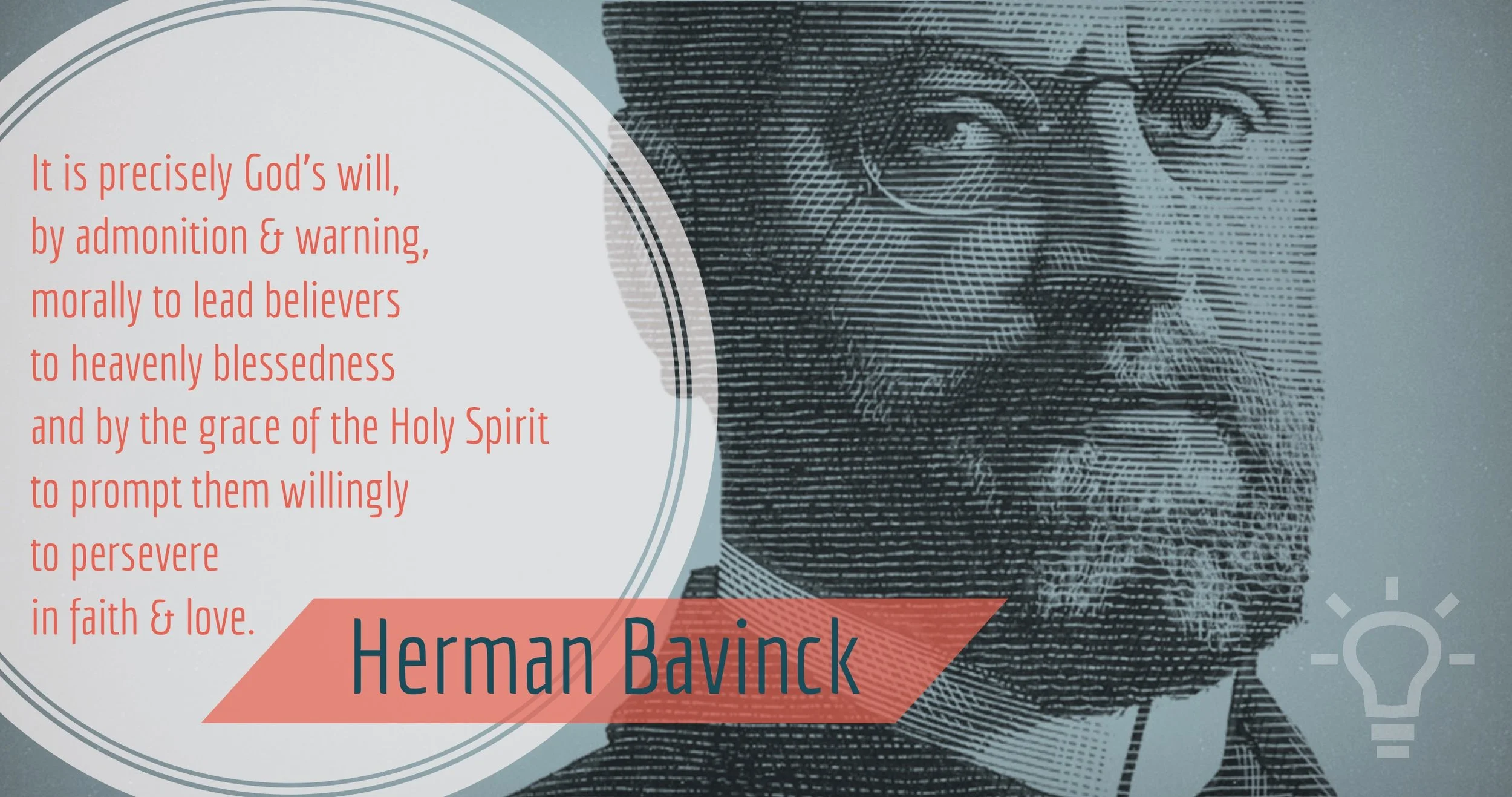
Bavinck: God’s Threats Against Believers Are Means Of Them Persevering
Herman Bavinck outlines the passages where Christians are warned and threatened against falling away, and are called to persevere in Christ, his word, and his love. Bavinck argues that these threats are used by God to motivate the willing perseverence, a perseverence that he has guaranteed in our regeneration and is not undermined by these threats.
Zealous For Good Works: What Are Good Works (part 1)?
Before we go further in the study of good works, it is important that we define exactly what we are talking about when we are talking about good works. First, let’s be clear what we don’t mean...

Zealous For Good Works
This post is the first in a series designed to encourage good works by providing excerpts from Reformed preaching and writing. But, before we get started, I think it is important to ask why this even matters... This post seeks to provide some biblical reasons we as Christians should we make a study of good works.
Union With Christ In the Westminster Shorter Catechism
There is much debate over whether we are to view union with Christ or justification as having a logical (even if not strictly chronological) priority in salvation.
While this post certainly will not settle that debate, I thought that it might at least prove helpful to briefly examine what the Westminster Shorter Catechism has to say about the subject. It is my contention that the Shorter Catechism is abundantly clear when it comes to spelling out for us which comes first (i.e. logical priority), union with Christ or justification.
The Lamb's High Feast: Good Reasons For Weekly Communion
One of the most frequently asked questions I receive from visitors is, “Why does your church celebrate the Lord’s Supper every Sunday?” There are several reasons for our practice and I organize them under three categories: Biblical/Exegetical, Theological/Practical, and Historical.
Since I serve in a Reformed congregation, visitors sometimes assume that we celebrate the Lord’s Supper 3, 4, 6, or 12 times a year. Some are genuinely puzzled that we would embrace a practice that is at odds with the practice of other local Reformed churches. I remind them that John Calvin advocated the “at least once a week” position.

Covenant Succession: Parenting In Faith
The doctrine of covenant succession (whether or not I knew it by these terms exactly) drew me to the reformed faith. The language of sonship, of heirs, of family, of promise, of generations, of covenant, stood in stark contrast to casting a lot and hoping it just happens to land in the lap. Nurturing our little ones in the faith rather than herding them towards it.

Introducing ReformedDeacon.com
Those who have served in diaconal ministry know well the prescience of the apostles in requiring deacons to be "full of the Spirit and of wisdom." Serving others in mercy ministry requires wisdom at every turn: to provide money or not, to offer counsel or hold your tongue, to consult with elders for help or handle a matter within a diaconate. Growing in wisdom should be a daily pursuit of the Christian deacon; as with all Christians, a deacon is to be transformed by the renewing of his mind and ask God "who gives generously to all without reproach" (James 1:5) to give him wisdom in a time of need.

Just Passing Through? When People Leave The Reformed Churches
Over the past 15 years, I have seen various men and women leave Reformed churches. Sometimes they move to Roman Catholicism or Eastern Orthodoxy. Other times they head for a more vanilla, antinomian, evangelical church. And sometimes they have left the faith altogether. Of course, this is anecdotal, but several things have stuck out about these conversions

Sanctified by Grace
Sanctification is our 'working out' what God Himself has 'worked in,' which includes not just the doing or working for His good pleasure, but even our willingness or desire to do so in the first place!

Psalm 3, You Are My Shield: Phone Wallpaper
Free phone backgrounds featuring lyrics from a setting of Psalm 3 by My Soul Among Lions. Available at http://clearnotesongbook.com/song/psalm-3-you-are-my-shield-msal

The Unio Mystica is our Great Salvation
This is a reminder that everything needed for salvation is literally in Christ alone. To all those living and walking by faith, the Triune God has proven his faithfulness to you. So let us sing with our hearts, all glory be to Christ!

Godliness With Contentment: Your Best Life Now
You don't like where you live? What you have? How you look? Wishing you could have your best life now? God's surprising prescription is godliness with contentment.

Only One Covenant of Grace: The Earliest Commentary On The WCF
The New Testament and Old Testament do not differ in substance but only in accident (its manner or shape fitting to its time and use). The essential unity of the Old and New Covenants is seen clearly in that both contain the same spiritual blessings: the promise of grace, forgiveness, and eternal life and blessing for believers in Jesus Christ. In addition, both covenants contain the requirement of the same faith and obedience.

Covenant Children and the Church Triumphant
"A child of the covenant has died. The hearts of the parents are bleeding and bid fair to break. Their pastor seeks to console them. What shall he say?" - Kuiper
Use our archive link above to find all of our available blog content, or search for your topic or author of interest.
Featured Posts
We need not reinvent Christianity or carve out ever-smaller enclaves to prove our faithfulness. We do not need to imitate the liberal order’s obsession with identity and control. We can return to nature, heritage, tradition, fathers, and our faith. Sectarian comfort is a false security for a people who have forgotten how to receive life from God’s hand. It will take Christian courage in an age of liberals and sects to grow deeper roots and provide a more secure and fruitful future.

Follow us on social media: